
Start with a clear purpose, one well-chosen model and a quantity you can put to use.
A first tote collection does not need several bag colours and a large stock commitment. For a shop, museum, café or small brand, one considered design can be enough to test demand and learn what customers prefer.
Begin by deciding what the bag is for. Will you sell it as merchandise, include it with a purchase, or give it to visitors at an event? That choice affects the design, quantity and budget. This guide uses a priced 50-bag configuration from our dark grey recycled tote range to make the planning concrete.
1. Decide how the collection will be used
If the tote will be sold, give customers a reason to want the design as well as the bag. A distinctive illustration, a local connection or a recognisable brand identity may help shape the brief. Do not assume that a large logo alone makes a product people will buy.
If the bag is included with purchases, check that it fits the products you commonly sell. If it is for an event, decide who receives one and how it will be distributed. These details give you a more useful quantity estimate than a general ambition to “launch merchandise”.
Write a one-sentence brief before choosing colours or artwork: who the bag is for, what it needs to carry and why the recipient would use it again.
2. Start with one model and one design
Keeping the first run focused makes feedback easier to interpret. If you launch several colours and designs at once, you have to decide how to divide stock before you know what people want.
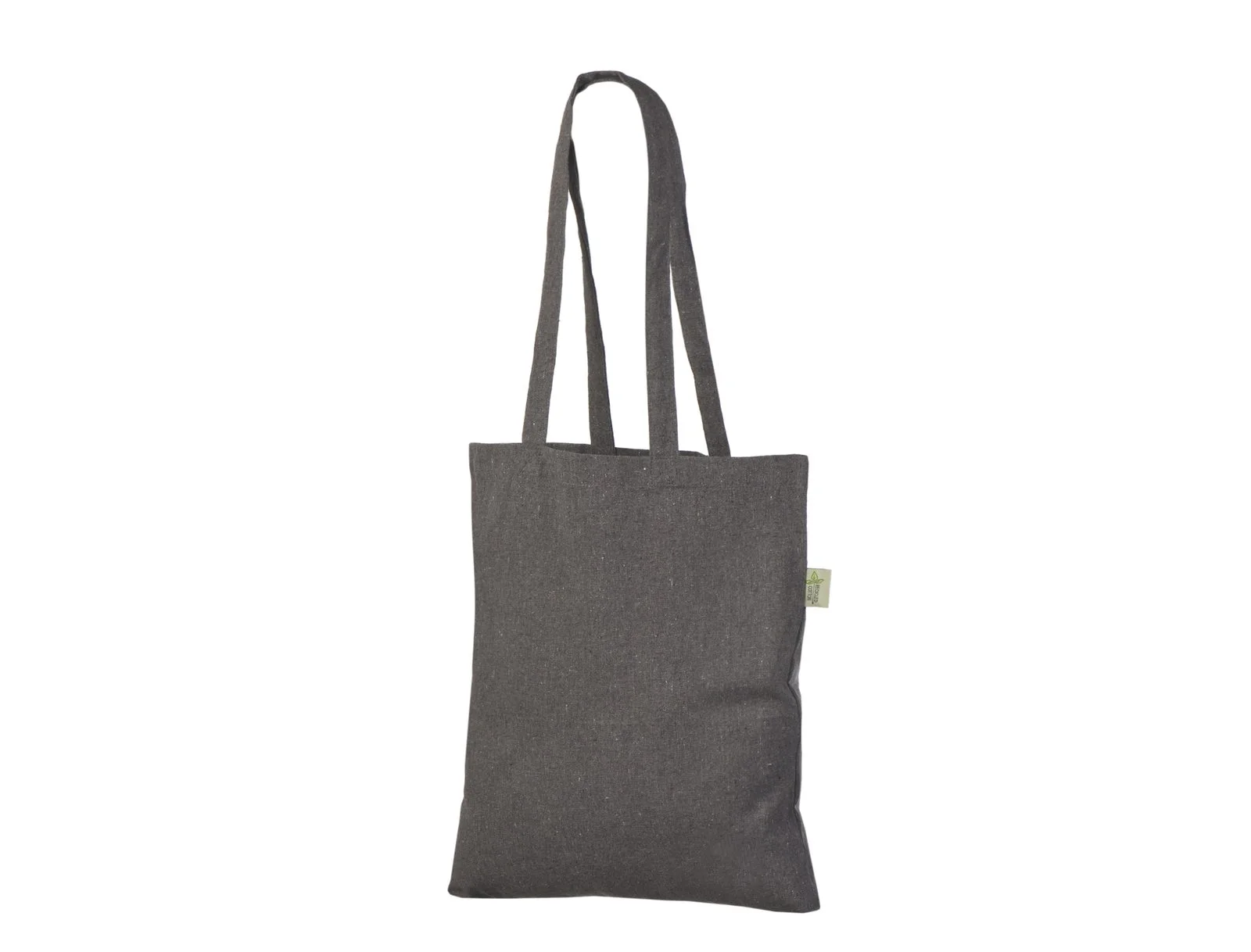
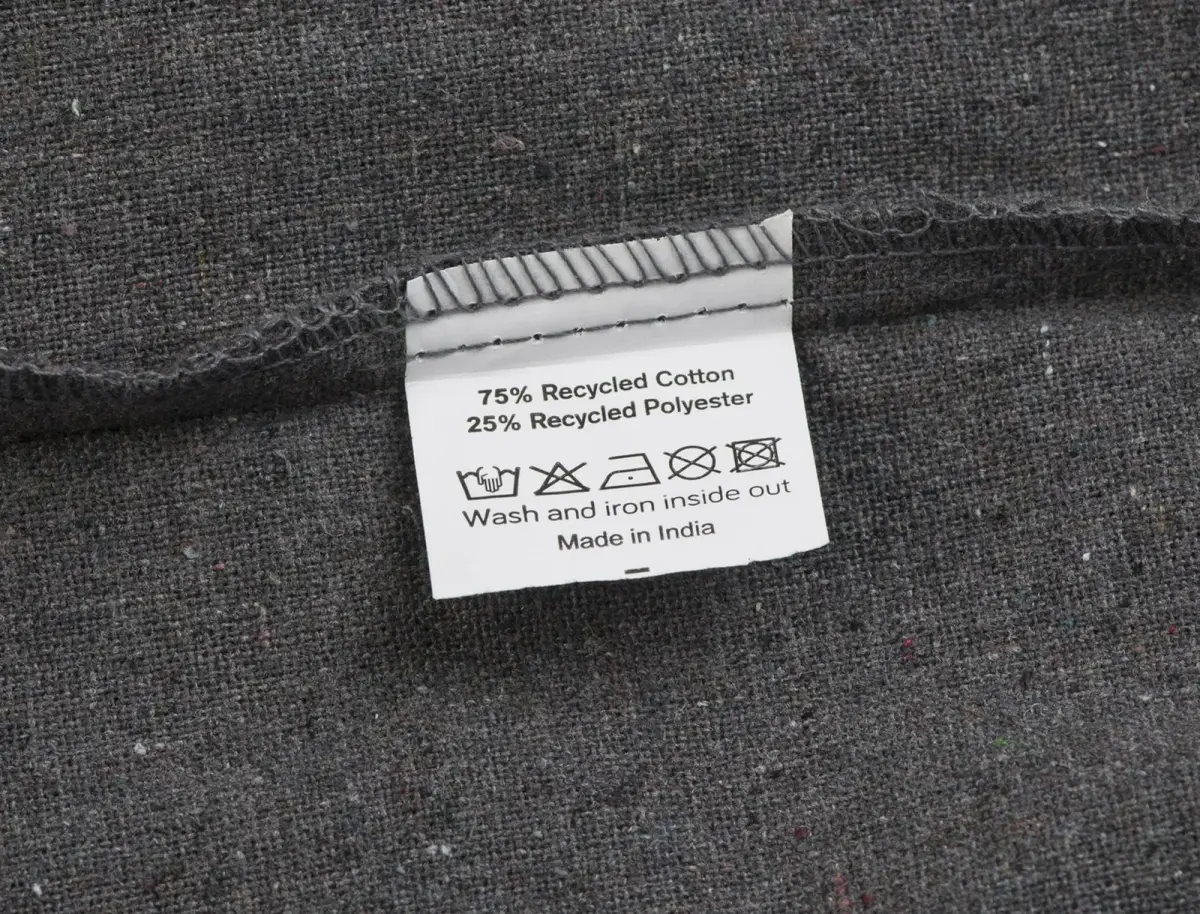
Our dark grey recycled tote is a 38 × 42 cm flat bag in 180 g/m² fabric, made from a blend of 75% recycled cotton and 25% recycled polyester, as shown on its label. The long handles offer an over-the-shoulder carrying option. A gusseted recycled model is also available when your contents need more depth.
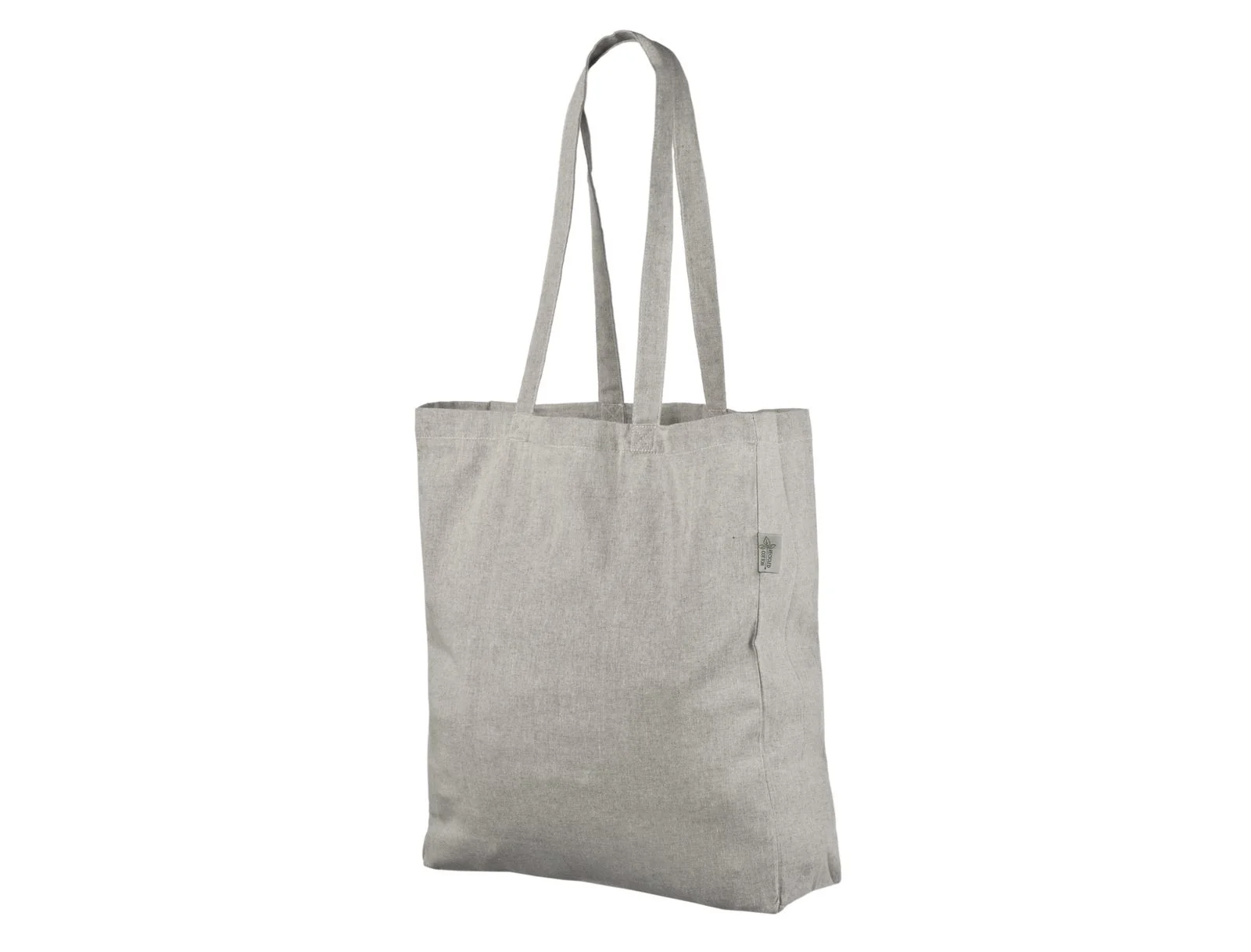
Compare the 180 g/m² flat recycled bag with the 140 g/m² gusseted recycled range. Choose the shape around the contents, then assess the artwork on that particular colour and fabric.
Describe recycled materials using the selected product’s confirmed information. Do not call a cotton/polyester blend “100% cotton”, and avoid environmental claims that go beyond what you can support.
3. Set a first-run budget using the right quantity
On the Ireland product page, the dark grey 180 g/m² recycled tote offers a 50-piece order option. These examples use one-colour printing:
| Quantity | Price per bag | Order total |
|---|---|---|
| 50 | €4.55 | €227.50 |
| 100 | €2.95 | €295.00 |
| 1,000 | €1.65 | €1,650.00 |
Delivery included. VAT excluded. Product-page prices checked on 14 September 2026. Confirm the final quote for your artwork and delivery details.
In this example, moving from 50 to 100 bags adds €67.50 to the order and gives you 50 more bags. That may be useful if you have a clear place to sell or distribute them. It is still an additional commitment, so base the decision on likely use and available storage.
The €1.65 starting price belongs to a 1,000-piece order. It is not the unit price for a 50-piece launch.
4. Check the artwork before committing
Ask for a mockup on the exact bag model and colour. Review the artwork’s scale, position and contrast. If you have both a one-colour and a multi-colour version, compare the prices before making the selection.
Ask about a sample if the fabric feel, colour or construction will influence your decision. Clarify whether it is a product sample or a sample with your own print, since these answer different questions.
Check the quotation before dividing an order across several designs. A listed 50-piece option for one configuration does not establish the terms for five different designs of ten bags each.
5. Learn from the first batch
Choose a small set of things to record: how many bags were sold or given out, which use case prompted interest, what people said about the design, and whether the size suited the contents. Keep feedback alongside the product model and artwork version so it is useful for a reorder.
If the first batch is for sale, calculate the retail margin using the full cost to your business, including any onward fulfilment and applicable taxes or fees. The bag’s purchase price alone does not determine a profitable retail price.
Reorder when you have evidence that the design and quantity make sense. You can then keep the successful combination, change the artwork, or add a second option with a clearer reason.
Frequently asked questions
Does every bag in the range start at 50 pieces?
Check the exact product. The 50-piece example here was verified for the dark grey 180 g/m² recycled tote; it is not a promise about every model or customised project.
Can I call it a limited edition?
Use that description when it reflects a real limit you intend to keep. A small first order by itself does not define what future production will be.
Plan a first run
Ready to plan a first run? Send your preferred model, artwork and quantity, and tell us how the bags will be used.